Widowed Women During the Civil War Chsnges in Family Structure
Civil War Widows
by Angela Esco Elder
The feel of widows of civil state of war soldiers.
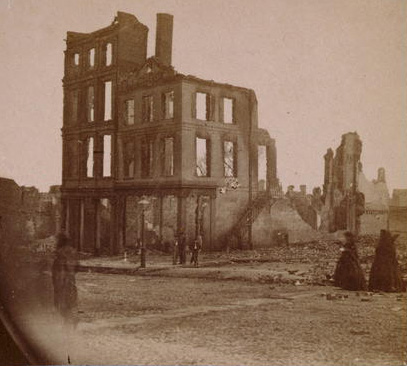
Hetty Cary was pretty, so pretty that i soldier believed her to exist "the most cute woman of her twenty-four hours and generation…birthday the near beautiful woman I ever saw in whatever land." On Thursday, January 19, 1865, "Richmond's belle" walked down the aisle and married a Confederate brigadier general, John Pegram. In spite of the raging Civil War "all was bright and cute" at their wedding, which took place in Saint Paul'due south Episcopal Church. John presently returned to duty and on February 5 he received a shot above his lower rib and died almost instantly in the snow. Exactly three weeks from the date of her wedding, Hetty found herself in the same church, with the aforementioned people, the same minister, walking down the same aisle, for the funeral. "Again has St. Paul's, his ain dear church," wrote 1 female person diarist, "receive[d] the soldier and his bride—the i coffined for a hero'due south grave, the other, stake and trembling, though even so by his side, in widow'due south garb." Afterwards the anniversary, the attendees took a "slow pilgrimage" up a steep bluff to the Pegram plot in the Hollywood Cemetery. Hetty "was like a flower broken in the stalk," and so heartbroken that before she had to exist torn from the body "about by force." John's family gathered behind the widow, only 29 years one-time. Three weeks a wife, Hetty would remain a widow for over 15 years.[1]
The American Ceremonious War created an unprecedented number of immature white widows, many married for a brusque amount of time, like Hetty Cary. Between 1861 and 1865, approximately three meg husbands, fathers, sons, uncles, and brothers left for war. Approximately 750,000 American families would never run across their loved one'southward confront once again as the men died, often far from abode. Every bit a result, some 200,000 white women became widows within these iv years. For many Amalgamated widows, like many women in the South, the war was an extremely close and personal feel, every bit battles and armies brought decease, destruction, and shortages into their states, their communities, and, for some, their backyards. Many Amalgamated widows played an important function in supporting the Confederacy during the war and memorializing information technology after the conflict. Spousal relationship widows, on the other manus, received the honor and respect of a nation at the close of the war, for they had sacrificed their husbands to a winning crusade. And yet, in spite of their political differences, the grieving process and emotional journeys of Union and Confederate white widows contained many similarities. The loss of a married man and the struggle to live within the societal expectations affected all widows, regardless of geographic location.[2]
When men left for war, the ways in which they could meet their demise were nearly innumerable—disease, prisons, and bullets took men both slowly and suddenly. Many widows, and society every bit a whole for that matter, angrily came to believe "the roll of expiry is fearful—the cruel monster is insatiable." Earlier the state of war, a married woman expected to sit beside a bed, hold her married man'due south paw, and watch him dice later a long, fulfilling life. This type of expiry, the "Good Death," inverse during the Civil War as men died away from home. Most wives wanted to know the circumstances and details surrounding their spouses' deaths before starting time the grieving process. A well-written condolence letter immune a widow to place herself side by side to her husband's deathbed mentally. For case, a letter informed Louisa that her husband David was stricken "with xanthous fever Monday evening, of a sudden, and from the commencement was a very ill man." The author described the "virtually alarming symptoms" of her married man, the "homo help" which David received, the fluctuations of his wellness, who visited him, who was with him when he died, who held his hand, and the final messages David wished to be repeated to his family members. These details would bring comfort to wives like Louisa. She now knew that her hubby did not dice abruptly on a common cold battlefield or in a bustling hospital surrounded by strangers. Equally historian Drew Gilpin Faust emphasized, chaplains, nurses, doctors, and soldiers tried to keep "as many of the elements of the conventional Good Death equally possible" alive in their messages, aiming to soothe faraway wives. The comfort these letters provided, even so, was often fleeting, for no letter could bring a husband back to life again.[three]
Because prey reporting was inconsistent, a adult female was ofttimes at the mercy of the men who fought alongside her husband to acquire not merely the details of his death, but even that the death had occurred. The inflow of a rumpled envelope addressed with unfamiliar handwriting might contain a message from a human like William Fields, who wrote "equally yous in all probability have not heard of the death of your husband and every bit I was a witness to his death I consider it my duty to write you although I am a stranger to y'all." Likewise, Rosa Delony learned of her husband'southward decease not from the infirmary or fifty-fifty from a letter addressed to her. Instead, Rosa learned of Will's passing from a telegram written to her friend. "On account of her condition suspension the news to Mrs. Delony as best you lot tin…William Gaston Delony…died on Friday afternoon from the effects of gunshot wounds he received on the left leg. His funeral took identify on Saturday afternoon nearly four o'clock at Stanton Hospital where he died," the soldier wrote.[4]
Widows' responses to the news of death were as various as the widows themselves. From shock to denial, depression to acceptance, inconsolable wives came to terms with their new identity as widows in different ways. The corporeality of time this process took varied tremendously. Some women felt disoriented past the news, like Octavia "Tivie" Stephens, who wrote her blood brother "I know not how to write I am so bewildered." Though she had been told numerous times that her husband was dead, she felt, "I can non realize the whole truth, it seems dark and mysterious." For others, shock brought silence, such as the widow who responded "unnaturally calm and has not shed a tear…poor girl, I fearfulness the reaction when his body arrives—she had a pitiful and heavy responsibility left upon her and so young." For this type of widow, shock served every bit a temporary defense force, sheltering the mind from the overwhelming and besieging emotions.[five]
Not all widows reacted calmly. One young married woman created such a scene of "frantic grief" that a Pennsylvania nurse, Anna Holstein, felt the event was "graven every bit with an atomic number 26 pen" upon her retentiveness. According to Holstein, this particular wife "came hurriedly, as soon as she knew her husband was in a battle, just to find him dead and cached two days before her arrival." The immature woman refused to believe that her husband had been laid "beside his comrades in the orchard" and insisted that she see him. The widow could not incorporate herself as the shovels of globe slowly uncovered the grave. Consumed with "agonizing grief," the adult female "clutched the earth by handfuls" unable to "look the deadening process of removing the body." When the "slight roofing was removed, and the blanket thrown from off the confront, she needed merely one glance to assure her it was all too true." He was dead. She went back to the hospital, "passive and tranquillity below the stern reality of this crushing sorrow." This widow was not the only one who desired irrefutable proof. Another penned sorrowfully that "the last lingering hopes take all been crushed. None of usa could mistake those pieces of textile. I thank God that he had on clothes that we knew. Otherwise we never would have felt sure that they were his precious remains." Likewise, Barbara Ellen Huff only accepted the death of her hubby when her brother-in-law sent her a lock of her hubby'south hair. Such prove provided a confirmation that the wife was now widow.[half-dozen]
Observers oftentimes felt unsure of how to handle the reactions of widows, writing things similar "I cannot draw the grief of his widow & with sorrow I write these few lines." Some men struggled with the possibility of denying wives one concluding look at their husbands. Ane deceased husband was so "dreadfully mangled in the face" that even though the widow had the trunk, "information technology was impossible to allow the family a terminal expect…how harrowing to their feelings to think those loved forms so nearly and yet unable to obtain ane last agonizing expect." While some widows knew where their husbands were buried, many women did not even know where their married man's trunk lay. For Annie O'Hear, the arrival of messages only added to "her overwhelming grief for her husband, whom in that location can be little doubtfulness was killed in the fatal battle [in Virginia] which left desolation in so many other Charleston homes." Emma Holmes believed that a grieving widow was "the saddest of sights" and hated to run into "a young girl of dazzler, talents, refinement & wealth, whose mind is so clouded by melancholy as to be oblivious of the realities of the nowadays." Merely this sight was the reality, and it was everywhere.[seven]
No thing the response, one affair was certain: the husband was dead, and now, the piece of work of mourning would begin. The Civil War altered antebellum mourning rituals tremendously, impacting both wearable community and condolence messages. 1 contributing factor to this change was that the war created widows in higher numbers than ever before in American history. Judith McGuire felt "it is melancholy to see how many vesture mourning" clothes. Widowhood was more prevalent and more than visible in towns, especially Southern towns, which had not 1 widow, but many. On Dec 18, 1862, Lucy Breckinridge found herself surrounded past "fourteen ladies dressed in black" and remarked "there were so many ladies at that place, all dressed in deep mourning, that we felt equally if we were at a convent and formed a sisterhood." Unlike the antebellum period, during the Ceremonious State of war so many women wore black that it often seemed that the entire nation was cloaked in nighttime shadows.[eight]
The disability to buy proper mourning garb plagued women of lower classes. Peculiarly during the economic hardships of the Civil State of war, mourning was a luxury that these women could not afford. McGuire described "one deplorable daughter" who was "too poor to purchase mourning" due to "fallen fortunes." Another who could non afford to buy a mourning wardrobe dyed all of her wearing apparel black in order "to brand them suitable." Silk blackness dresses, heavy veils, and other features of antebellum mourning were expensive. With supply shortages and greater demands, the materials became even more expensive and harder to discover. Though they were priced-out of respectable mourning rituals, it seems lower class women oft did the best they could to mimic these community, even if it meant dying the only wearing apparel they owned in a gloomy ink.[9]
The increase of widows in their twenties and thirties also affected mourning rituals and expectations. While premature and sudden death certainly occurred in the antebellum menstruation, the extent to which the Civil War killed immature men astounded communities. The suddenness of this death led to a phenomenon of many young, significant widows, for instance. In a time when the average woman gave nativity to eight to 10 children in her lifetime, it is perhaps not and then surprising that the Civil War created and so many pregnant widows. When William Gaston Delony died, his wife was 8 months pregnant with a piffling daughter. The baby was born only a month subsequently her father's death, leaving Rosa with four children under the historic period of vii. Confederate officer Stephen Dodson Ramseur was ecstatic to hear the news of his young married woman's first pregnancy only felt it was "the greatest trial of my life to be separated from you now!" When his wife gave nativity, he claimed "the news relieved me of the greatest anxiety of my life" and immediately wrote her to ask whether he had a son or a daughter, signing the letter "with beloved inexpressible." This would be the final letter he would ever send. Shot in boxing, he died just days after his child'due south nascence, still unaware of his baby's gender. As Ramseur's story shows, even if the child had been built-in, at that place was a hazard a soldiering father would not encounter the bundle of joy. Unlike about antebellum widows, the war widow not only had to worry about herself, but besides her young children.[10]
While the younger age of widows would alter many aspects of their mourning experience, it did not impact every aspect of widowhood. Religious sentiments continued to announced in nigh every letter of the alphabet written to a adult female widowed during the Civil War. Like antebellum condolence letters, some correspondents genuinely attempted to comfort a widow with the notion of reunion in the futurity. Dallas Wood, afterward learning about the death of his brother-in-police force, reminded his sister that "we all take the cheering assurance of a beatific home in Heaven where there will be no war and no parting over again." Before his decease, a different husband wrote "I desire to come across yous all in oasis whear wores and fightings will exist ore, whear wives and husbands part no more than, whear parance and children each other greete, wheare all is joy and pleasure sweat." For forcefulness, one sympathizer encouraged a contempo widow to "lean you[r] head upon the bosom of your sympathizing Savior" and call back that "our Father reigns and in mercy remembers us." Similar the sentiments expressed in antebellum letters, the sympathetic thought that "God alone can sustain yous while passing thru' these deep, deep waters" and assurances that "God will help yous thro' your troubles" continued the religious consolation of the pre-war era.[11]
American social club became increasingly convinced that it was essential for state of war widows to think their belatedly husbands both honorably and oft and thus the notion became prevalent in condolence letters. The foundations for this idea came from the antebellum period, like the etiquette book which insisted widows "affections are in heaven, with the companions, whom, on globe they shall see no more." Etiquette required women to mourn for two and a one-half years. A war widow did not simply accept a expressionless husband, simply a "brave, gallant married man." A soldiering husband did not just dice, but died "whilst gallantly fighting for his country." "Bless God that you had such a married man whose retentiveness is honored and whose children will feel proud" wrote one condoler to a new widow. The pressure placed on widows to remember husbands stemmed from a fear that amidst soaring decease tolls, soldiers would be forgotten. In a letter to his sis, one soldier wrote that while he hoped she "may relish yourself this day and accept a merry Christmas," at that place was "no doubt y'all could relish your self much more if love Jimmy was alive." The death of a husband should not crusade a widow to be any less committed to the homo. Ideally, her devotion would non just proceed, merely increase.[12]
Wartime condolence letters also urged widows to remain loyal to the cause that their husbands died defending, especially in the South. The cause he died for was important, for null could be worse than to be remembered every bit "a hero in a broken crusade" who was "pouring out his wasted life," and leaving "the land he loved to darkness and defeat." Subsequently the war, the South wanted and needed someone to "strew the early flowers upon the soldiers' graves" and brand sure that "no grave has been forgotten." Only during the state of war, the Confederacy needed the support of widows to carry on. Condolence letters urged widows to think both the husband and the cause that put him in an early grave.[13]
Because the Civil War produced younger widows with children, letter writers felt the need to propose a widow on the care of her children. In the antebellum era, when information technology was more than likely widows would exist well across their childrearing years, this additional advice was irrelevant. However, a young widow should "take intendance of yourself for your dearest children. Who tin can make full a Mother's place?" Letters repeatedly echoed this reaction, reminding a woman that while she may be upset, she must fulfill her primary duty as a female parent. 1 mother in law scolded her tardily son's wife, saying she "must not give up on your feelings my beloved child, but think of those precious little ones whose sole dependence is upon you, strive to cheer upward." To the aforementioned widow, a cousin penned "for the sake of the petty ones depending upon you…exist calm and trustful." Even poems bestowed advice on grieving mothers, to "not exist by passion'southward tempest driven." Children needed to be fed, clothed, and watched. A mother too consumed with her own grief to treat her husband's prodigy was non desired.[14]
Unlike the antebellum menstruation, Civil War correspondents were not commonly a widow's similarly-anile peers or younger family unit members. Instead, many writers were older than the widows themselves, likely contributing to the more than advisory aspect of these letters. Condolence letters began to encourage widows to mimic older widows—often their mothers or aunts. For Eliza Walker, the model was her own female parent. Her male parent, while "examining a strange horse, he received a kick in the breast, and died instantly." As a widow, Eliza's mother represented the ideal in her eyes. "I know that no braver or more than wonderful woman ever lived," she wrote. Likewise, when William Delony'due south father died in 1832, Will's female parent Martha successfully raised four children on her own. With this precedence, Martha expected her girl-in-police force to be able to do the same for her grandchildren. "You have great work, Rosa," penned i loved one, noticing the tremendous amount of strain placed upon the young widow. And indeed she, and many others, did.[xv]
Beyond condolence messages, the Civil War gave a adult female a new advisor: her married man. Soldiering husbands, recognizing the hazard of premature deaths, began to requite their wives mourning instructions on how to live, should they dice. Asa V. Ladd, the soldier shot in retaliation for the Union men killed by a Confederate guerrilla leader, provided his wife with detailed instructions. "You need have no uneasiness about my future land, for my faith is well founded and I fear no evil. God is my refuge and hiding identify," he bodacious her. Equally such, "I want you to teach the children piety, so they tin can meet me at the right hand of God" he penned, echoing the sentiment of condolence messages in their religious instruction. He also wanted his wife to devote herself to her children by going "dorsum to the quondam place and try to make support." "You lot are now left to take care of my dearest children. Tell them to retrieve their honey male parent," he stressed. He did not desire to be forgotten. Asa as well included directions about endmost upwards his business organisation affairs and information to tell his friends. But to his wife, he just had assurances of love and a wish, that "I dont want you to let this bear upon your mind anymore than you can assist…I want yous to meet me in heaven," Asa wrote.[16]
Like those who wrote condolence letters encouraging widows to remember their husbands, husbands themselves held a deep fear that they would exist forgotten. "Dearest Linda," penned 1 husband a calendar month before his untimely decease, "let nothing change you lot from the path of faithfulness to me and the children," he cautioned. A soldier who performed his duty by fighting to the death hoped his family would exercise their duty by remaining proud and loyal to his memory. John F. Davenport wrote his wife that "I feal like I will return home to the sweat imbrace of y'all and our sweat Trivial Children," but added "if I should fall think I am fighting for the rites of Liberty for you lot and our Little ones." Non but did he desire Mary Jane to remember that he was fighting for liberty, his letters are too haunted past the fright that she would not remember him. "Oh my beloved earthlay Precious stone…if we should never live to see each other again in this life oh let u.s.a. live so we will be certain to meet in haven thare we volition never never parte once more," he penned. He craved an everlasting love. At the bottom of the letter of the alphabet, he wrote "forget me never" and circled the sentiment. A minié ball ended John's life on July nine, 1864.[17]
The Ceremonious War also gave widows an entirely new task to consummate: get their husbands' bodies home. The idea of a body resting far from abode, or worse, in enemy soil, was unacceptable. A adult female'due south mourning work began once she had a identify to mourn. If a widow could manage to decide the location of the body, she should "seek a grave for the dead" at domicile, "close past those he loved, among kindred and friends in the fair sunny land he died to defend." Wedlock husbands, similar William F. Vermilion, also informed their wives that they would similar to make it habitation-whether expressionless or alive. On June 30, 1863, William wrote: "You accept oftentimes asked what I want yous to do if I should non become home." After thinking on the idea, he had come to a decision. "Go me habitation if you tin," he penned, "bury me on some nice loyal spot of footing, plant flowers over the grave." Almost importantly, "don't forget to go to that spot Dollie," he concluded. The last matter that soldier wanted was to be left far from abode. "I don't want to sleep in the land of traitors," he explained, "I couldn't rest well."[xviii]
In sum, the ideal widow wore blackness, mourned for a minimum of two and a half years, resigned herself to God's will, focused on her children, modeled herself later on older widows, followed her husband'due south wishes, devoted herself to his memory, and if she were Confederate, to his cause, and got his trunk abode for burial. These messages of ideal wartime widowhood, coming from condolence letters, husbands, literature, and newspapers permeated all of American society. But in the cease, it was up to the widow to interpret all of these messages, live within the pressure, and navigate her way through mourning. The Civil War changed the prescription of widowhood, simply she could decide which elements to perform. As a lived feel, widowhood changed. Information technology had to. Advice on paper was one thing, real emotion was another. The widow was the one living through widowhood and she would choose how it would expect in her life.
Some widows did attempt to alive upwardly to the ethics their communities stressed. Soldiers ofttimes recorded stories and encounters that reinforced this image of the saintly and dedicated widow. Robert Stiles, while in Virginia, sat on the porch of a farm house with "a soldier'due south widow." The young widow noticed that "my coat was desperately torn." The widow, "kindly offering to mend it," took the jacket and immediately saturday downwards to set up the tear. No soldier in her late husband's regular army would appear in a torn jacket if she could help information technology. The widow could no longer gear up her own husband's clothing, so she at present fixed that of other Confederate soldiers, supporting the cause her married man gave his life for.[19]
But for some widows, it was harder to achieve the ideal even if they chose to try. Grief plagued widows in different degrees and at dissimilar times. Some were younger than others and some had barely tasted union before it was over. Grief-stricken widows sometimes struggled with resignation to their situation. Ellen Long Daniel managed to maintain her immense grief in a way that many would have appreciated—privately. She lost her hubby in 1864 and filled a scrapbook with poems, pictures, and newspaper clippings related to war and loss. Through this scrapbook, readers proceeds a tremendous insight into her grief. Early on in the book appears the poem entitled "Gone," which included lines like "life is blank to a girl broken hearted." For a Confederate widow especially, she should embody peace and acceptance, both during and later the war. True feelings of grief and heartbreak in their often loud and ugly grade would shatter this fragile image of the supportive Confederate lady. Widows could mourn, but mourn silently, filling scrapbooks with their grief, as Ellen did. In improver to the poesy, her scrapbook besides included a huge picture of Mary Anna Jackson, the widow of Stonewall Jackson. She was a woman Ellen could empathise. When looking through the volume in private, Ellen could permit passion reign. But in public, she would not do and so. She would play the role of an accepting widow.[20]
And however, while this ideal was crafted, molded, and accepted past some, some other stock character emerged inside the realm of widowhood—one which rejected the model. This stereotype of the flirty widow, was at all-time comical. At her worst, she could bring nearly the destruction of American morality. Of class, not all of American society believed that young widows must remain unmarried forever. Near sanctioned remarriage subsequently the respectable amount of time had passed. Nor was the thought of a flirtatious widow new. One New York etiquette book, published in 1846, conceded that "there is a peculiar fascination about widows…whether it past sympathy for the weeds of mourning, the interest excited past a lady in distress, or a certain air acquired past feel in marriage, widows are very commonly the objects of a tender passion." And yet, at a fourth dimension of war, a jerky remarriage suggested that the loss of the husband was unimportant. Southern gild specially could non and would not accept the thought that "all our sacrifices, all the blood shed has been for nothing." They believed moving on should not be an easy, painless process. Happy, hurried marriages suggested otherwise and were thus discouraged.[21]
The idea of the flirty widow prevailed in jokes, books, and messages. The stereotype became so prevalent that the idea of the flirty widow permeated both northern and southern camps alike. Asking his wife in Pennsylvania to "excuse the lewdness of the joke," Charles Johnson proceeded to inform her that the poetic line "Oh! for a guild in some vast wilderness, amidst a contiguity of shade" had been paraphrased to "Oh! for a club in some vast widow's nest, amidst a contiguity of hair." He so explained that he had only been trying to remember the poem, but "the 2 slipped into my idle brain together." He was not alone, for the joke appears in other wartime journals and messages of other soldiers, such as New Yorker Willoughby Babcock, who recorded in a alphabetic character that a friend of his "tantalizingly" asked: "How would you lot like a lodge in some vast widow's nest?"[22]
A modicum of truth fueled the fun, and the fears, in the grapheme of the flirty widow. For some men, young widows seemed to take on a certain peculiar bewitchery. In September 1863, Mary Bell believed she had discovered "the secret allure that widows seemed to possess." She supposed that their allure blossomed from their grief. "How much more than the heart is touched past the tender beauty of a adult female who has loved and suffered than by the gay shallow pink & white prettiness of a girl," she remarked to her husband. While remarking upon the physical attractiveness of a widow was not so scandalous, the supposed irresistibility proved to exist more worrisome. James T. Ayers, a clergyman with the 104thursday Regiment of Colored Troops, struggled to resist the allure of a Tennessee widow. He described her in his diary every bit a "Petty bewitching yong Blue Eyed fairskined widow tidy Enough for i to swallow." "Seldom practice I meet her Eaquals anywhere," he continued, "God anoint the Footling widow, them Blueish Eyes that Little plump Rosy Cheek them Fragile Lilly white hands that Lady Like Smile." Ayers had visited her with the intention to recruit her slave into his regiment. As he rode away withal, he realized "that Niggling woman had Acquired me to forget" his purpose. Ayers shrugged off the loss, concluding that a "human would be A monster Could he Deny such an Angel as this" anyhow.[23]
Flirting could lead to an fifty-fifty greater impertinence: an early remarriage. Although some saw nothing wrong with a widow finding love once again—provided she roughshod head over heels after mourning her soldier hubby for 30 months—some young widows were unable or unwilling to look that long. Upon seeing a flirty widow on the train, one stranger commented to Mary Boykin Chesnut: "Well, await yonder. Every bit soon as she began whining virtually her dead beaux I knew she was after another one…It won't be her fault if she don't have some other one soon." The stranger watched a minute more than and so remarked again, "she won't lose any time." Likewise, Naomi Hayes believed widows were even more impatient for marriage than maidens, for "those who already knew the pleasures of married life were less willing to live exterior it." In a case study of Virginia, historian Robert Kenzer compiled statistical information suggesting that the younger a widow was, the greater the likelihood that she would remarry. Through an assay of pension records and census data, Kenzer determined that 1866 was the most mutual year for remarriage and that widows who remarried had a median age of twenty-4 years in 1860. He concluded that "given the tremendous shortage of men after the conflict, the opportunity to remarry was quite restricted except for the youngest and wealthiest southern women." This shortage helps to explain why some young widows, when presented with an opportunity for marriage, refused to expect for two and a half years.[24]
Despite these exceptions, the majority of white widows did try to live inside the strengthened regulations of mourning closely. Many wives institute themselves heartbroken and grasping to cope with their loss. In a time wracked with uncertainty, a prescribed way for grieving was 1 consistency upon which widows could depend. The traditions relieved suffering by giving clear expectations in a time of emotional chaos. An platonic war widow honored her husband and his cause with her every action. The ideal widow would certainly not flirt, trip the light fantastic toe, attend parties, or remarry. In the abstract she could serve as the epitome of all the nation was and could be. If she was southern, she poured her power, her back up, and her emotions into the Confederacy. Merely some women, usually of a younger age and a higher social class, challenged the restrictive war prescriptions with their deportment. In doing and then, they threatened the virtue the nation was attempting to maintain. In reality, widows would always be a mere replica of the platonic and some women reflected the vision better than others. The eternally devoted widow and the promiscuous widow are only two extremes in a range of experiences. State of war was chaotic and grief was messy. To exist sure, many were watching to discover if a widow proved worthy of her "Noble husband." Some women lost husbands they loved and some women lost husbands they did not. Bullets pierced the lungs, legs, and livers of animate, thriving men. The expressionless were gone. Merely for their wives, their widows, life continued. Widows had a globe to face, a life to live, and a future to shape. And and so, in a manner reminiscent of their husbands, they marched on.[25]
- [i] This essay as well keeps all spelling and phrasing quoted from documents in its original form without including the intrusive [sic] notation. On some occasions, punctuation has been converted to modern-day notations for clarity. Henry Kyd Douglas, I Rode with Stonewall: The War Experiences of the Youngest Member of Jackson's Staff (Chapel Hill: The University of North Carolina Press, 1940), 271, 325; Judith W. McGuire, 12 March 1865, in Diary of a Southern Refugee during the State of war by A Lady of Virginia (Lincoln: University of Nebraska Press, 1995), 341; Burton Harrison, Recollections Grace and Gay (New York: Charles Scribner's Sons, 1911), 203, 205; Jane Cary to Mr. Riccards, as quoted in Walter S. Griggs, Jr., General John Pegram, C.S.A. (Lynchburg: H.E. Howard, Inc., 1993), 118.
- [2] The number of women widowed by the Ceremonious War is difficult to determine. J. David Hacker provides the most recent number, suggesting that approximately 750,000 men lost their lives in the Civil War, and that if 28% of the men who died in the war were married at the time of their death, 200,000 widows would be created. There are no statistics currently available for African American widowhood, and piddling research has been completed on the feel of these widows. J. David Hacker, "A Demography-Based Count of the Civil War Dead, Civil War History, Vol. LVII No. iv. (2011), 311. A map illustrating the tremendous number of widows created past the Civil War can exist constitute in J. David Hacker, Libra Hilde, and James Holland Jones, "The Event of the Civil War on Southern Marriage Patterns," The Journal of Southern History, Vol. LXXVI, no. i (February 2010), 65. Other sources which include detailed discussions of mortality statistics include Drew Gilpin Faust, This Democracy of Suffering: Death and the American Ceremonious War (New York: Random House, Inc., 2008) and Maris A. Vinovskis, "Have Social Historians Lost the Civil War? Some Preliminary Demographic Speculations," in Toward a Social History of the American Civil State of war: Exploratory Essays, edited past Maris A. Vinovskis (New York: Cambridge University Press, 1990).
- [3] Emma Holmes, October viii, 1864, in The Diary of Miss Emma Holmes 1861-1866, ed. John F. Marszalek (Billy Rouge: Louisiana State University Press, 1979), 375; F. Lay, to East. Fifty. Harris, 11 Oct 1864, David Bullock Harris Papers, 1789-1894, Manuscript Department, William R. Perkins Library, Duke University; For an splendid book on expiry in the Civil War which includes a lengthy discussion of this notion of a Expert Death, see Faust, This Democracy of Suffering, six-11. In addition to Faust, in 2008 Mark S. Schantz published a vital book on religion, death, and the American Ceremonious War. Like Faust, he refers only to widows tangentially. Mark South. Schantz, Awaiting the Heavenly Country: The Civil State of war and America's Civilization of Death (Ithaca: Cornell University Press, 2008).
- [4] William Fields to Mrs. Fitzpatrick, June eight, 1865, Maria Clopton Papers, Medical and Infirmary Collection, Eleanor S. Brockenbrough Library, Museum of the Confederacy, Richmond, Va as quoted in Faust, This Republic of Suffering, fifteen; The Southern Telegraphy Company, telegram from W. L. Church to Pleasant Stovall, 6 October 1863, Deloney Papers, Hargrett; John F. Stegeman, These Men She Gave: Civil War Diary of Athens, Georgia (Athens: University of Georgia Printing, 1964), 99, 149-l.
- [v] Octavia Stephens to Davis Bryant, April 4, 1864, in Rose Cottage Chronicles: Civil War Alphabetic character of the Bryant-Stephens Families of North Florida, eds. Curvation Fredric Blakey, Ann Smith Lainhart, and Winston Bryant Stephens, Jr. (Gainesville: Academy Press of Florida, 1998), 334; Emma Holmes, July 4, 1862, in The Diary of Miss Emma Holmes 1861-1866, ed. John F. Marszalek (Billy Rouge: Louisiana State University Press, 1979), 179.
- [6] The widow in this story is non identified as either a Union or a Amalgamated sympathizer, merely this is not particularly important. Raw, initial, searing emotions are human, not Wedlock or Confederate. Mrs. H [Anna Morris Ellis Holstein], 3 Years in Field Hospitals of the Army of the Potomac (Philadelphia: J. B. Lippincott, 1867), v, 13; Louis P. Towles, ed., World Turned Upside Down: The Palmers of Due south Santee, 1818-1881 (Columbia: University of South Carolina Press, 1996), 404, quoted in Faust, This Republic of Suffering, 146; Robert Kenzer, "The Uncertainty of Life: A Profile of Virginia'southward Civil War Widows," in The War Was You and Me: Civilians in the American Civil War, ed. Joan E. Cashin (Princeton: Princeton Academy Press, 2002), 120.
- [7] David Todd to Emilie Todd Helm, April 15, 1862, Helm Papers, Kentucky Historical Lodge, quoted in Stephen Berry, House of Abraham: Lincoln and the Todds, A Family Divided By War (New York: Houghton Mifflin Harcourt Publishing Company, 2007), 116; Emma Holmes, 26 July 1861, in The Diary of Miss Emma Holmes 1861-1866, ed. John F. Marszalek (Baton Rouge: Louisiana State University Press, 1979), 70; Augustina Stephens to Octavia Stephens, Welka, March 21, 1864, in Rose Cottage Chronicles, 330; Emma Holmes, June 22, 1864, in The Diary of Miss Emma Holmes 1861-1866, ed. John F. Marszalek (Baton Rouge: Louisiana State University Printing, 1979), 356; Emma Holmes, June 22, 1864, Diary of Miss Emma Holmes, 356.
- [eight] McGuire, 3 Jan 1864, 250; Lucy Breckinridge, Lucy Breckinridge of Grove Hill: The Periodical of a Virginia Daughter, 1862-1864, ed. Mary D. Robertson (Columbia: University of South Carolina Press, 1994), 18 December 1862, 88-89.
- [9] Historian Stephanie McCurry contends that the Confederacy became accountable to poor whites and women in means the one-time South never had been. My inquiry leads me to believe the Confederacy is in fact even more answerable to its widows, even those of lower classes. Stephanie McCurry, Amalgamated Reckoning: Power and Politics in the Civil War South (Cambridge: Harvard Academy Press, 2010); McGuire, iii January 1864, 250; Faust, This Republic of Suffering, 150.
- [10] The baby was a girl; Jan Lewis and Kenneth A. Lockridge, "'Sally Has Been Sick': Pregnancy and Family unit Limitation Amongst Virginia Gentry Women, 1780-1830," in Journal of Social History, Vol. 22, No. ane, Fall, 1988, 5-nineteen; Stephen Dodson Ramseur, The Bravest of the Brave: The Correspondence of Stephen Dodson Ramseur, ed. George G. Kundahl (Chapel Hill: The Academy of North Carolina Press, 2010), 287, 289, 290.
- [11] Dallas Forest, Dalton, Georgia, to Louisa A Nixon, Mt. Pleasant Florida, 25 December 1861, Nixon Letters, University of Florida (UF); John F. Davenport to Mary Jane Davenport, 7 September 1862, John F. Davenport Civil War Letters, 1862-1864, Alabama Department of Archives and History, Montgomery, Alabama; Martha D. D. to Rosa Delony, Athens, Georgia, October xiii, 1863, November 6, 1863, Deloney Papers, University of Georgia.
- [12] Lizzie Torrey, The Ideal of Womanhood, or, Words to the Women of America (Boston: Wentworth, Hewes & Co., 1859), 130-2; Martha D. D., 13 October 1863; Maria Delony, xi Baronial 1864, Deloney Papers, UGA; Sam Adams to Amanda Moore, 27 September 1863, Sydenham Moore Family Papers, 1833-1373, Alabama Department of Archives and History, Montgomery.
- [13] Mary E. Flemming to Octavia "Tivy" Bryant Stephens, Stephens-Bryant Family Papers, George A. Smathers Special and Area Studies Collections, University of Florida; Ellen Long Daniel's Scrapbook, Daniel Papers, University of Northward Carolina, Chapel Hill (UNC).
- [14] M. D. D. to Rosa Delony, half-dozen November 1863; Maria Delony to Rosa Delony, xi August 1864, Deloney Papers, UGA; Martha D. Duncan, to Rosa Delony 25 November 1863, Deloney Papers, UGA; Ellen Long Daniel's Scrapbook, Daniel Papers, University of North Carolina, Chapel Hill.
- [15] Eliza Jane Kendrick Walker, Other Days: Reminiscences, 1924, pg 94-95, Alabama Department of Archives and History, Montgomery, 63; Martha D. Duncan, to Rosa Delony 25 November 1863, Deloney Papers, UGA.
- [16] Asa V. Ladd, Gratiot St. Prison in St. Louise, MO, to wife, 29 October 1864, Ladd Papers, Tennessee State Library and Archives.
- [17]Harris Hardin Averett, Camp near Pollard, to Malinda Waller Averett, Reeltown, Alabama, x September 1863, Harris Hardin Averett Papers, 1854-1863, Alabama Department of Archives and History (ADAH); Dallas Wood, Dalton, Georgia, to Louisa A Nixon, Mt. Pleasant Florida, 25 December 1861, Nixon Letters, UF. M. D. D. to Rosa Delony, 14 January 1864, Deloney Papers, UGA; John F. Davenport to Mary Jane Davenport, 20 Baronial 1862, John F. Davenport Civil War Letters, 1862-1864, ADAH; John F. Davenport to Mary Jane Davenport, 1 June 1864, ibid.
- [18] An excellent article on the topic of women retrieving bodies is Judith Giesberg's "The Work the Remains," in The Civil War Monitor: A New Look at America's Greatest Conflict. Vol. i, No. 1, 38-45; McGuire, 28 October 1864, 310-313; William Vermilion, Helena, Arkansas, to Mary Vermilion, 30 June 1863 in Beloved Amid the Turmoil: The Ceremonious War Letters of William and Mary Vermilion ed. Donald C. Elder Iii (Iowa Metropolis: Iowa Press, 2005), 150.
- [19] Robert Stiles, Four Years Under Marse Robert 3rd ed. (New York: The Neale Publishing Company, 1904), 322-323.
- [20] Ellen Long Daniel's Scrapbook, Daniel Papers, UNC.
- [21] The Art of Skillful Behavior; and Alphabetic character Writing on Love, Courtship, and Spousal relationship: A complete guide for ladies and gentlemen, particularly those who take not enjoyed the advantages of fashionable life (New York: Published past C. P. Huestis, 1846), 108-110; "Despair, Hope, and Delusion: The Plummet of Confederate Morale Reexamined" in The Collapse of the Confederacy, eds. Mark Grimsley and Brooks D. Simpson (Lincoln: Academy of Nebraska Press, 2001), 154.
- [22] Charles F. Johnson to Mary Johnson, xix June 1864, in Charles F. Johnson, The Civil War Letters of Colonel Charles F. Johnson: Invalid Corps, ed. Fred Pelka (Amherst: Academy of Massachusetts Press, 2004), 256; Willoughby Babcock, Selections from the Letters and Diaries of Brevet-Brigadier General Willoughby Babcock of the Lxx-5th New York Volunteers (New York: The Academy of the State of New York, 1922), 94.
- [23] Mary W. K. Bell to her hubby, September i, 1863, The Civil State of war Microfilm Collection, #824, Reel four, Tennessee Library and Land Archives, Nashville, Tennessee; James T. Ayers Journal, May half-dozenthursday, 1864, in The Blue and the Grayness: The Story of the Civil War as Told past Participants (Volume I: The Nomination of Lincoln to the Eve of Gettysburg), edited past Henry Steele Commager (New York: Bobbs-Merrill Company, Inc., 1973), 82.
- [24] Mary Chesnut, Mary Chesnut'south Civil State of war, ed. C. Vann Woodward (New Haven: Yale Academy Press, 1981), 489-ninety; Drew Gilpin Faust, Mothers of Invention: Women of the Slaveholding Due south in the American Civil State of war (Chapel Colina: The Academy of North Carolina Press, 1996), 150; Kenzer, 125.
- [25]For the post-state of war feel of Civil War widows, especially the pension organisation, see: Amy Eastward. Holmes, "'Such is the Cost We Pay': American Widows and the Civil War Pension Organisation," in Toward a Social History of the American Civil State of war: Exploratory Essays, ed. Maris A. Vinovskis (New York: Cambridge University Press, 1990); Megan J. McClintock, "Civil State of war Pensions and the Reconstruction of Union Families," Journal of American History 83, no. two (September 1996); Jennifer L. Gross, "The United Daughters of the Confederacy, Confederate Widows, and the Lost Crusade: "We Must Not Forget or Fail the Widows," in Women on Their Own: Interdisciplinary Perspectives on Being Single, eds. Rudolph G. Bell and Virginia Yans (New Brunswick: Rutgers Academy Press, 2008); Yard. D. D. to Rosa Delony, 6 Nov 1863, Deloney Papers, UGA.
Source: https://www.essentialcivilwarcurriculum.com/civil-war-widows.html

Post a Comment for "Widowed Women During the Civil War Chsnges in Family Structure"